Guide
7-Day Family Dinner Plan (Budget Under $100) — 2026 Guide
By Editorial Team · Updated 2026-03-22
Feeding a family of four nutritious, home-cooked dinners every night does not have to cost a fortune. This complete 7-day dinner plan keeps your weekly grocery bill under $100 by building meals around affordable whole foods — chicken thighs, ground turkey, eggs, rice, seasonal vegetables, and pantry staples. Every recipe takes 40 minutes or less, and the included shopping list ensures you buy exactly what you need with zero waste.
By Chef Sarah Mitchell, Family Nutrition Specialist · Last updated March 2026
This article contains affiliate links. If you purchase through our links, we may earn a small commission at no extra cost to you. See our affiliate disclosure for details.
| Day | Dinner | Estimated Cost | Active Cook Time |
|---|---|---|---|
| Monday | Sheet Pan Chicken Thighs with Roasted Vegetables | $14 | 35 min |
| Tuesday | Ground Turkey Taco Night | $12 | 25 min |
| Wednesday | Slow Cooker Black Bean Soup | $8 | 15 min prep |
| Thursday | One-Pot Pasta with Italian Sausage | $13 | 25 min |
| Friday | Egg Fried Rice with Vegetables | $7 | 20 min |
| Saturday | Baked Potato Bar | $10 | 40 min (mostly passive) |
| Sunday | Chicken and Vegetable Stir-Fry | $11 | 30 min |
Overview: 7 budget-friendly family dinners for under $100 total
Table of Contents
- Why Budget Meal Planning Works
- Monday: Sheet Pan Chicken Thighs with Roasted Vegetables
- Tuesday: Ground Turkey Taco Night
- Wednesday: Slow Cooker Black Bean Soup
- Thursday: One-Pot Pasta with Italian Sausage
- Friday: Egg Fried Rice with Vegetables
- Saturday: Baked Potato Bar
- Sunday: Chicken and Vegetable Stir-Fry
- Complete Shopping List (Under $100)
- Budget Meal Planning Tips That Actually Work
- Essential Kitchen Tools for Budget Cooking
- Frequently Asked Questions
- Sources & Methodology
Why Budget Meal Planning Works
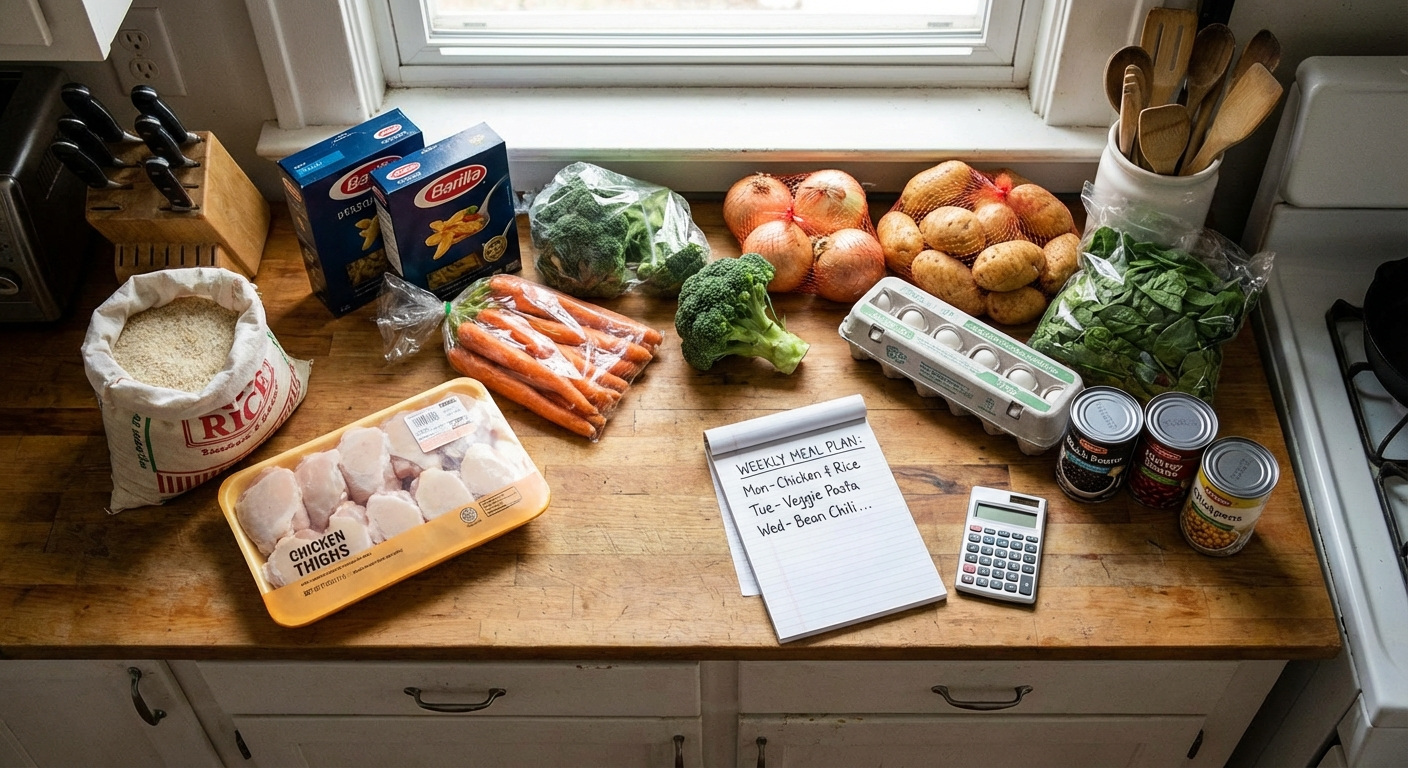
The average American family of four spends between $250 and $350 per week on groceries, according to the USDA's 2025 food cost reports. A significant portion of that spending goes toward impulse purchases, convenience foods, and ingredients that spoil before they are used.
Budget meal planning attacks all three problems simultaneously. By deciding what you will eat before you shop, you eliminate impulse buying. By building meals around affordable whole ingredients rather than pre-made sauces and boxed kits, you cut per-meal costs dramatically. And by purchasing only the quantities you need, food waste drops to near zero.
A 2024 study published in the Journal of Nutrition Education and Behavior found that families who followed a structured weekly meal plan spent an average of 23 per cent less on groceries than families who shopped without a plan. For a household spending $300 per week, that translates to roughly $3,600 saved annually.
This plan is designed around five core principles:
- Affordable proteins — chicken thighs, ground turkey, eggs, dried beans, and Italian sausage provide high-quality protein at $0.50 to $1.50 per serving
- Seasonal and versatile vegetables — broccoli, bell peppers, potatoes, carrots, cabbage, and onions appear across multiple meals
- Pantry staple foundations — rice, pasta, canned beans, and basic spices form the backbone of most dinners
- Cross-meal ingredient use — buying one large pack of chicken thighs serves Monday and Sunday, eliminating waste
- Minimal specialty ingredients — nothing in this plan requires a trip to a specialty store
If you are new to structured meal planning, our step-by-step guide on how to meal plan for a week walks through the complete process from pantry audit to grocery list.
Monday: Sheet Pan Chicken Thighs with Roasted Vegetables
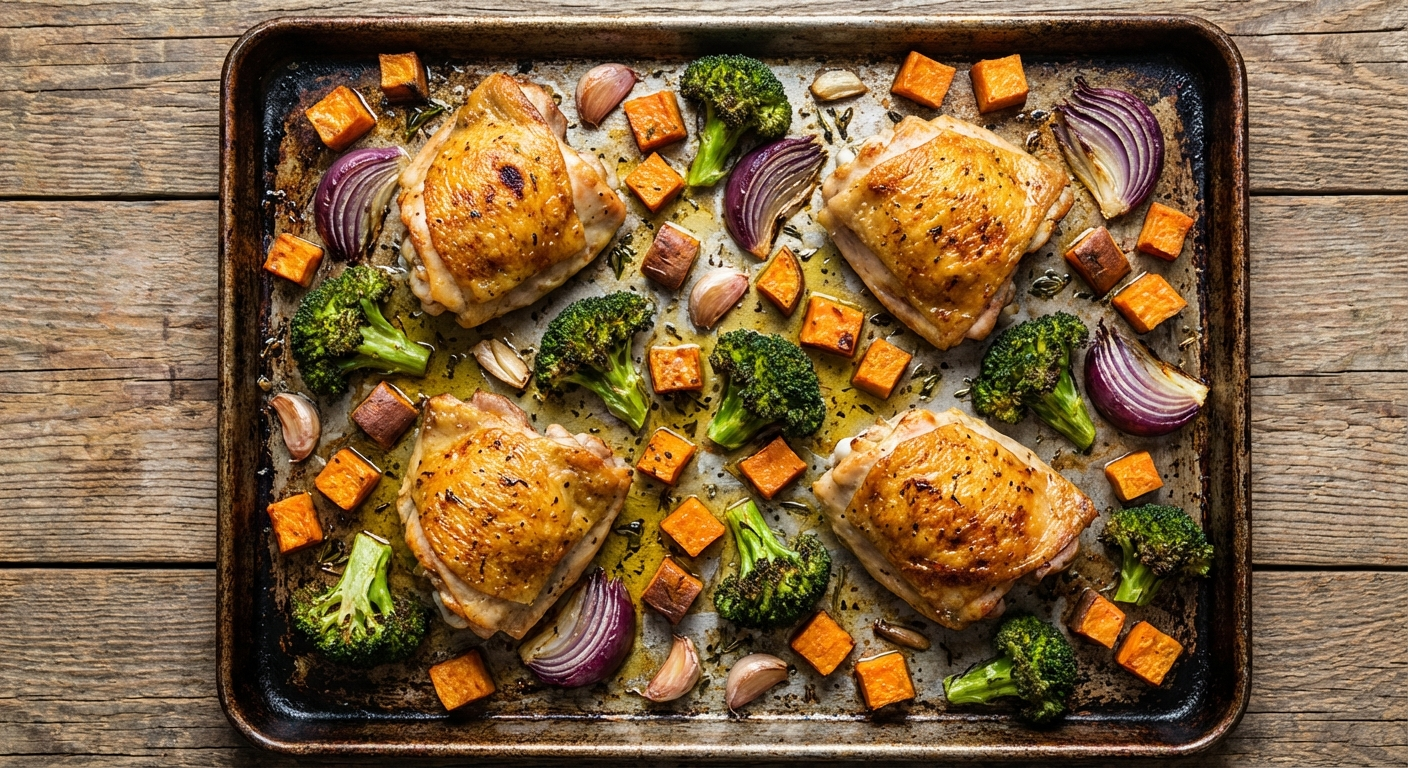
Cost: approximately $14 for 4 servings ($3.50 per person) Active time: 10 minutes prep, 25 minutes roasting
Sheet pan dinners are the foundation of budget cooking — one pan, minimal cleanup, and the oven does the work. Bone-in, skin-on chicken thighs are significantly cheaper than breasts (typically $2 to $3 per pound versus $4 to $6) and produce juicier, more flavourful results.
Ingredients
- 8 bone-in, skin-on chicken thighs (approximately 2.5 lbs)
- 2 large sweet potatoes, cubed
- 1 large head of broccoli, cut into florets
- 1 red onion, cut into wedges
- 3 tablespoons olive oil
- 1 teaspoon garlic powder
- 1 teaspoon smoked paprika
- Salt and pepper to taste
Method
- Preheat oven to 220°C / 425°F.
- Toss sweet potatoes and broccoli with 2 tablespoons olive oil, salt, and pepper. Spread on one side of a large sheet pan.
- Pat chicken thighs dry with paper towels. Season with garlic powder, paprika, salt, and pepper. Drizzle with remaining olive oil. Place skin-side up on the other half of the pan.
- Roast for 25 to 30 minutes until chicken skin is crispy and internal temperature reads 74°C / 165°F.
- Rest for 5 minutes before serving.
Budget tip: Buy a family pack of chicken thighs (5 lbs) and split it between Monday and Sunday. The per-pound price drops significantly when you buy the larger pack.
Leftover strategy: Set aside 2 chicken thighs for Sunday's stir-fry. Store in an airtight container in the fridge — they will keep for 4 days.
Tuesday: Ground Turkey Taco Night
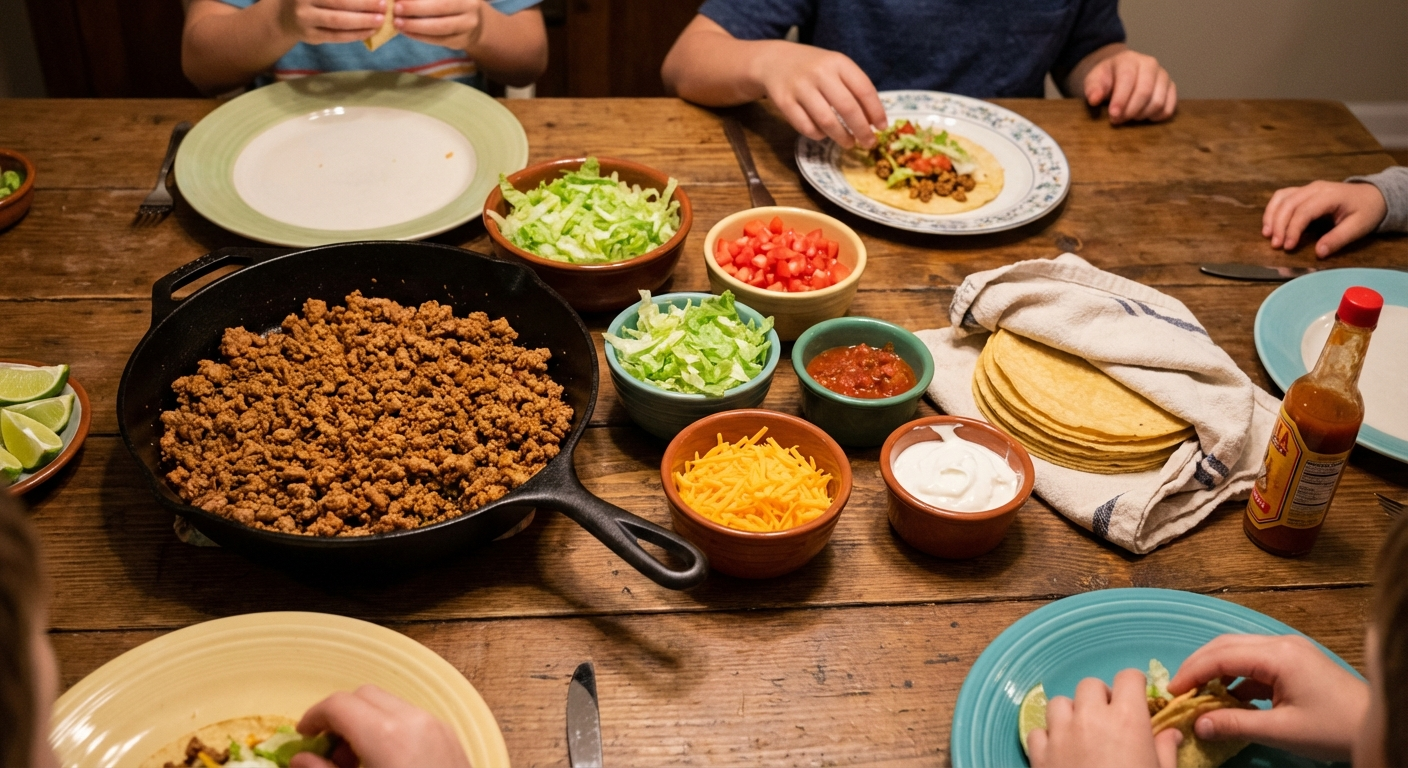
Cost: approximately $12 for 4 servings ($3.00 per person) Active time: 25 minutes
Taco night is one of the most budget-friendly dinners you can make, and it solves the picky eater problem because everyone assembles their own plate. Ground turkey is leaner and often cheaper than ground beef, especially in the 93/7 lean variety.
Ingredients
- 1.5 lbs ground turkey
- 1 packet taco seasoning (or homemade: 1 tbsp chili powder, 1 tsp cumin, 1/2 tsp garlic powder, 1/2 tsp onion powder, 1/4 tsp cayenne)
- 12 corn tortillas
- 1 cup shredded lettuce
- 2 tomatoes, diced
- 1 cup shredded cheddar cheese
- 1/2 cup sour cream
- 1 can black beans, drained and rinsed (optional — stretches the meat further)
Method
- Brown ground turkey in a large skillet over medium-high heat, breaking it into small pieces with a spatula.
- Drain any excess liquid. Add taco seasoning and 1/3 cup water. Simmer for 5 minutes until thickened.
- If using black beans, add them during the last 2 minutes to warm through.
- Warm tortillas in a dry skillet or microwave.
- Set out all toppings and let everyone build their own tacos.
Budget tip: Making your own taco seasoning from bulk spices costs roughly $0.15 per batch versus $1.50 for a store-bought packet. Over a year of weekly taco nights, that is $70 saved on seasoning alone.
Kid-friendly note: Young children often prefer their taco components separated on a plate rather than stuffed inside a tortilla. Same ingredients, different presentation, zero complaints.
Wednesday: Slow Cooker Black Bean Soup
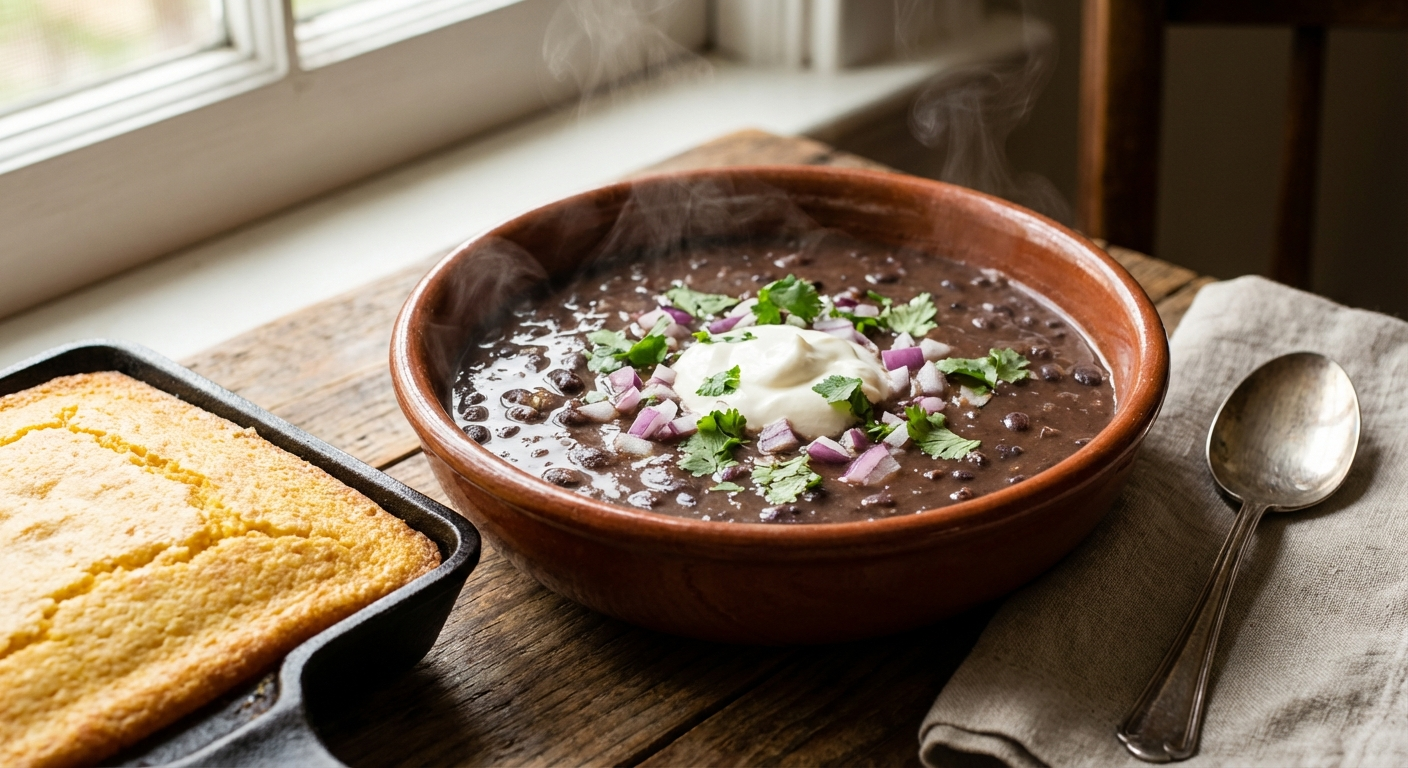
Cost: approximately $8 for 4 servings ($2.00 per person) Active time: 15 minutes morning prep
Wednesday is the cheapest dinner of the week and requires virtually no evening effort. You load the slow cooker in the morning and come home to a fully cooked meal. Dried black beans are one of the most affordable protein sources available — a one-pound bag costs under $2 and produces enough beans for two meals.
Ingredients
- 1 lb dried black beans, soaked overnight and drained
- 1 large onion, diced
- 3 cloves garlic, minced
- 2 carrots, diced
- 1 can diced tomatoes (14 oz)
- 4 cups chicken or vegetable broth
- 1 teaspoon cumin
- 1 teaspoon smoked paprika
- Salt and pepper to taste
- Optional toppings: sour cream, shredded cheese, cilantro, hot sauce
Method
- Add soaked beans, onion, garlic, carrots, diced tomatoes, broth, cumin, and paprika to the slow cooker.
- Cook on LOW for 8 hours or HIGH for 4 hours.
- When beans are tender, use an immersion blender to partially blend the soup (leave some beans whole for texture).
- Season with salt and pepper. Serve with toppings.
Budget tip: Dried beans cost 60 to 70 per cent less than canned beans. One pound of dried beans yields about 5 to 6 cups cooked — equivalent to roughly three cans. The only trade-off is the overnight soak, which takes 30 seconds of effort.
For families interested in the anti-inflammatory benefits of bean-based meals and how spices like turmeric and cumin support gut health, this guide on anti-inflammatory family meal plan covers the science in detail.
Thursday: One-Pot Pasta with Italian Sausage
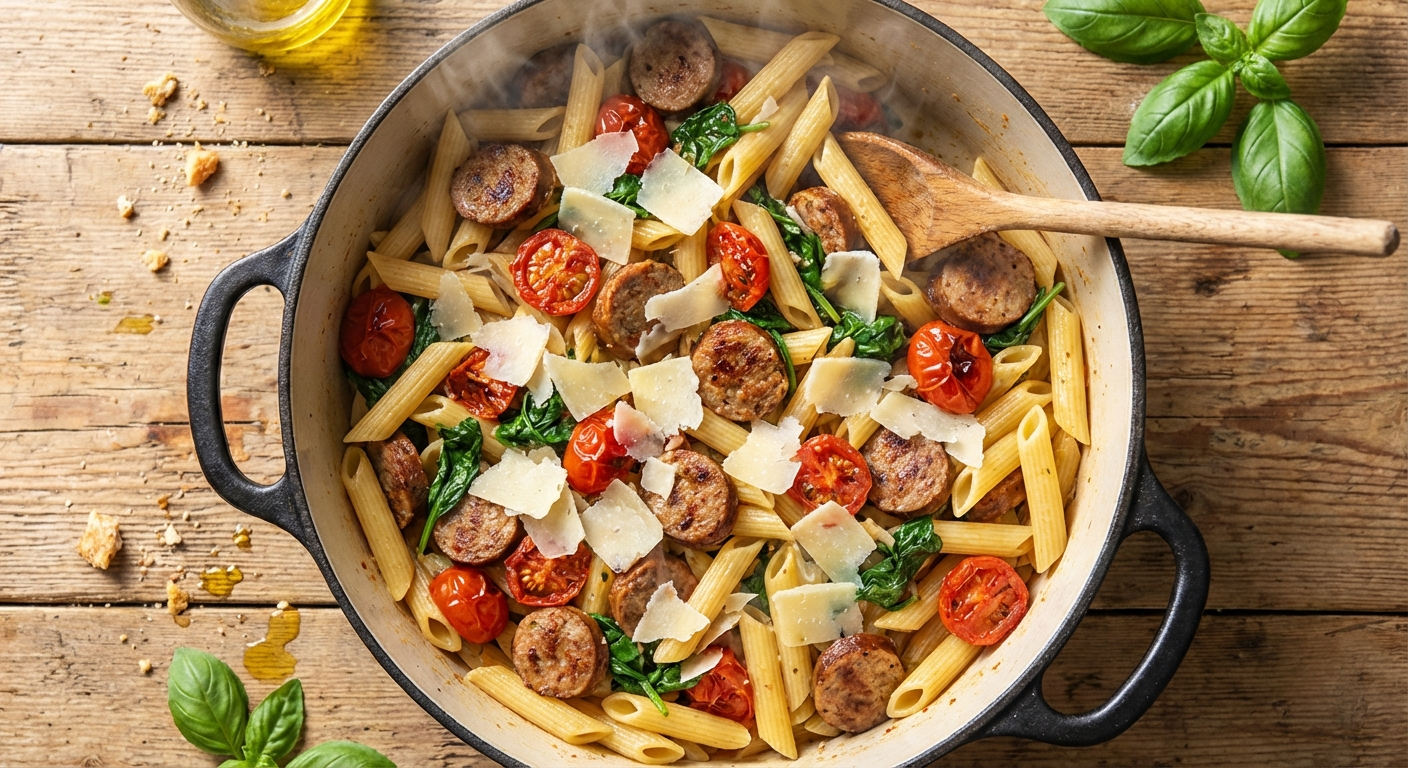
Cost: approximately $13 for 4 servings ($3.25 per person) Active time: 25 minutes
One-pot pasta is the ultimate weeknight shortcut — the pasta cooks directly in the sauce, absorbing all the flavour and eliminating the need for a separate pot of boiling water. Italian sausage adds rich, seasoned flavour without requiring additional spices.
Ingredients
- 1 lb penne or rigatoni pasta
- 1 lb Italian sausage (sweet or hot), casings removed
- 1 can crushed tomatoes (28 oz)
- 2 cups chicken broth
- 2 cups fresh spinach
- 3 cloves garlic, minced
- 1 tablespoon olive oil
- 1/2 cup grated parmesan cheese
- Red pepper flakes (optional for adults)
Method
- Heat olive oil in a large, deep pot over medium-high heat. Add sausage and break into bite-sized pieces. Cook until browned, about 6 minutes.
- Add garlic and cook for 30 seconds until fragrant.
- Add crushed tomatoes, chicken broth, and dried pasta. Stir to combine. Bring to a boil, then reduce to a simmer.
- Cover and cook for 12 to 14 minutes, stirring every 3 to 4 minutes to prevent sticking, until pasta is al dente and liquid has been absorbed.
- Stir in spinach until wilted (about 1 minute). Top with parmesan.
Budget tip: Store-brand pasta and canned tomatoes perform identically to premium brands in cooked dishes. The average price difference is $1.50 to $2.00 per item — switching to store brand across your entire grocery list can save $15 to $20 per week.
Friday: Egg Fried Rice with Vegetables
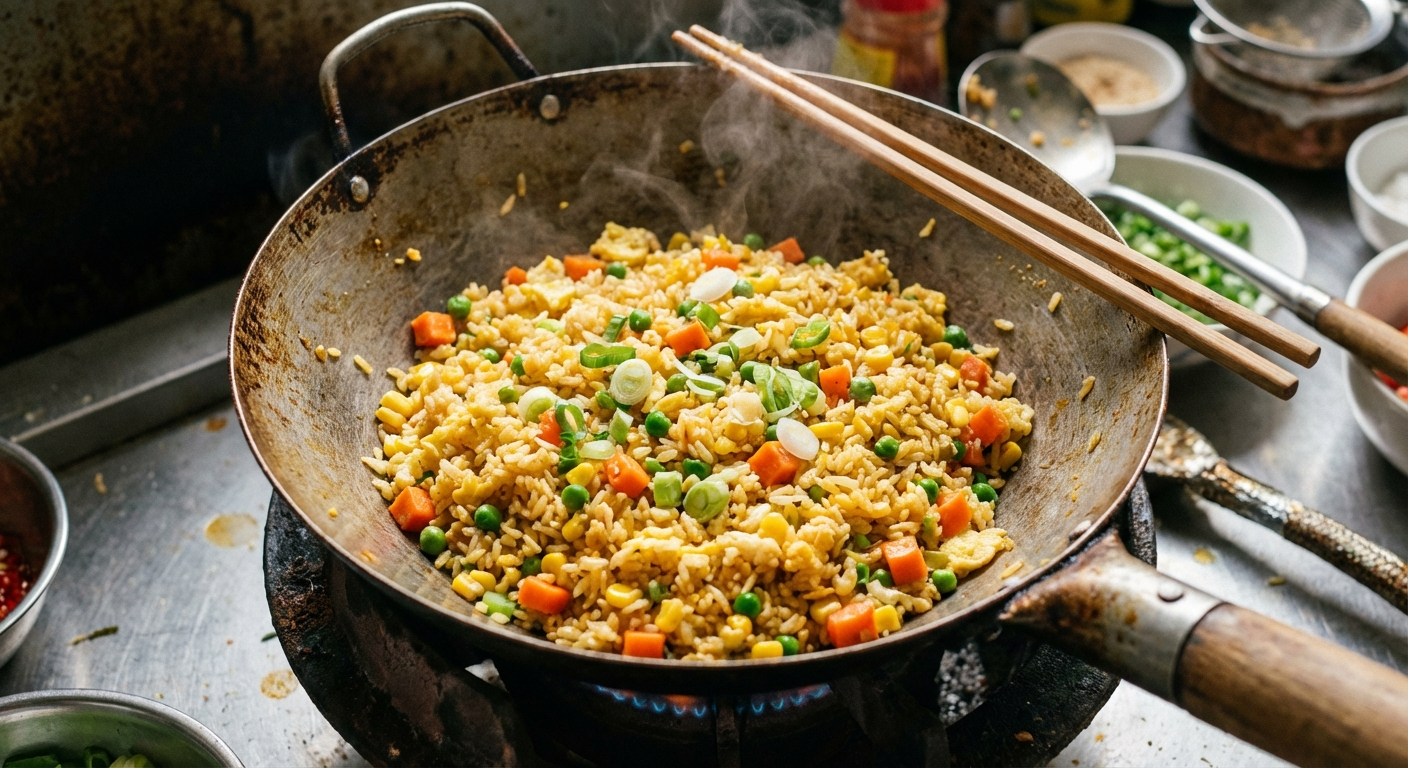
Cost: approximately $7 for 4 servings ($1.75 per person) Active time: 20 minutes
Friday is the most affordable dinner of the week. Egg fried rice transforms leftover rice, a few eggs, and whatever vegetables you have on hand into a satisfying one-pan meal. The key to restaurant-quality fried rice is using cold, day-old rice — freshly cooked rice is too moist and will turn soggy.
Ingredients
- 4 cups cooked rice (prepared earlier in the week or the night before, then refrigerated)
- 6 eggs, beaten
- 1 cup frozen peas and carrots (the pre-mixed bags)
- 3 green onions, sliced
- 3 tablespoons soy sauce
- 1 tablespoon sesame oil
- 2 tablespoons vegetable oil
- 1 clove garlic, minced
Method
- Heat 1 tablespoon vegetable oil in a large skillet or wok over high heat. Add beaten eggs, scramble until just set, then transfer to a plate and break into small pieces.
- Add remaining tablespoon of oil. Stir-fry frozen peas and carrots for 2 minutes.
- Add garlic and cook for 30 seconds.
- Add cold rice, breaking up any clumps with your spatula. Stir-fry for 3 to 4 minutes until rice is heated through and starting to crisp slightly.
- Add soy sauce and sesame oil. Toss to coat evenly.
- Return scrambled eggs to the pan. Toss together. Garnish with green onions.
Budget tip: Cook a large batch of rice on Sunday during your prep session. Use some for Monday's dinner and refrigerate the rest for Friday's fried rice. One bag of rice ($3 to $4) provides the starch component for multiple meals throughout the week.
Saturday: Baked Potato Bar
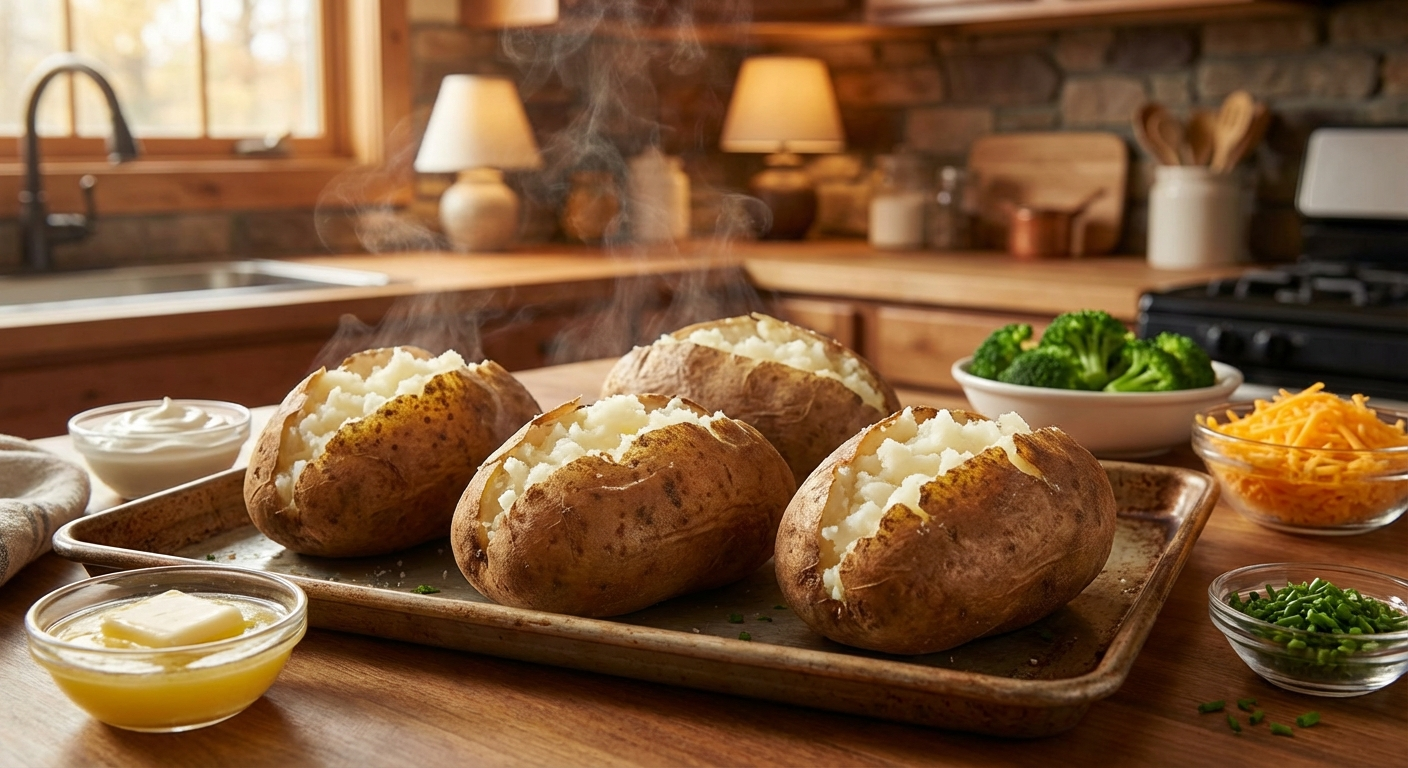
Cost: approximately $10 for 4 servings ($2.50 per person) Active time: 10 minutes prep, 45 to 60 minutes baking (passive)
Baked potato bars are deceptively satisfying, endlessly customisable, and absurdly cheap. A five-pound bag of russet potatoes costs $3 to $4 and feeds the family multiple times. The toppings use ingredients already purchased for other meals this week — cheese from taco night, sour cream from the soup, broccoli from Monday's sheet pan.
Ingredients
- 4 large russet potatoes
- 2 tablespoons olive oil
- Coarse salt
- Toppings: butter, sour cream, shredded cheddar cheese, steamed broccoli florets, chives or green onions, leftover ground turkey from Tuesday
Method
- Preheat oven to 200°C / 400°F.
- Scrub potatoes, prick several times with a fork, rub with olive oil, and sprinkle generously with coarse salt.
- Place directly on the oven rack and bake for 50 to 60 minutes until a fork slides through the centre easily.
- Split potatoes open, fluff the insides with a fork, and set out all toppings for self-service.
Budget tip: Reuse leftover toppings from earlier in the week. The shredded cheese, sour cream, and broccoli from previous dinners pull double duty here, which means Saturday's grocery cost is essentially just the potatoes themselves.
Make it a meal: If the family wants more substance, warm up leftover black bean soup from Wednesday and serve alongside the potatoes. The combination of potato and beans creates a complete protein.
Sunday: Chicken and Vegetable Stir-Fry
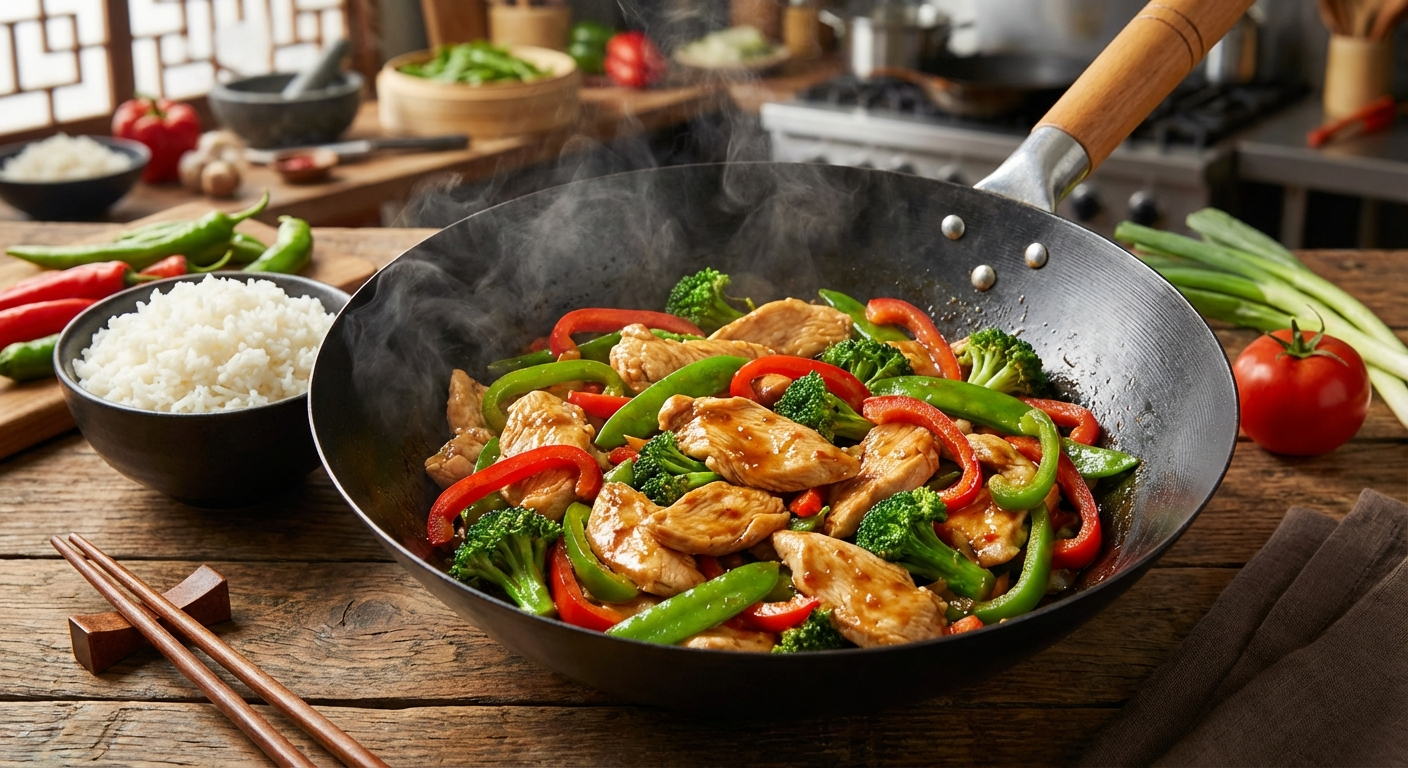
Cost: approximately $11 for 4 servings ($2.75 per person) Active time: 30 minutes
Sunday's stir-fry closes the loop on the week. It uses the chicken thighs set aside from Monday's sheet pan dinner (or fresh ones from the same bulk pack) plus any remaining vegetables in the fridge. Stir-frying is fast, flavourful, and one of the best methods for using up odds and ends before they expire.
Ingredients
- 2 chicken thighs (leftover from Monday, shredded or sliced) or 1 lb fresh chicken thigh meat, sliced
- 2 bell peppers (any colour), sliced
- 1 head broccoli, cut into small florets
- 2 carrots, sliced thin on the diagonal
- 3 tablespoons soy sauce
- 1 tablespoon honey or brown sugar
- 1 tablespoon cornstarch mixed with 2 tablespoons water
- 1 tablespoon vegetable oil
- 1 clove garlic, minced
- 1 teaspoon fresh ginger, grated (or 1/2 tsp ground ginger)
- Cooked rice for serving
Method
- If using fresh chicken, heat oil in a wok or large skillet over high heat. Cook chicken pieces for 5 to 6 minutes until browned and cooked through. Remove and set aside. (If using leftover chicken, skip this step.)
- In the same pan, stir-fry carrots and broccoli for 3 minutes. Add bell peppers and cook for 2 more minutes.
- Add garlic and ginger, cook for 30 seconds.
- Mix soy sauce, honey, and cornstarch slurry together. Pour over vegetables.
- Return chicken to the pan. Toss everything together until sauce thickens and coats the ingredients, about 1 to 2 minutes.
- Serve immediately over steamed rice.
Budget tip: Sunday evening is also a good time to take stock of what is left in the fridge and plan any adjustments for the following week. A quick 5-minute audit on Sunday night can prevent midweek emergency grocery runs that blow the budget.
For a complete system for turning Sunday audits into a weekly planning habit, check out our weekly family meal plan template.
Complete Shopping List (Under $100)
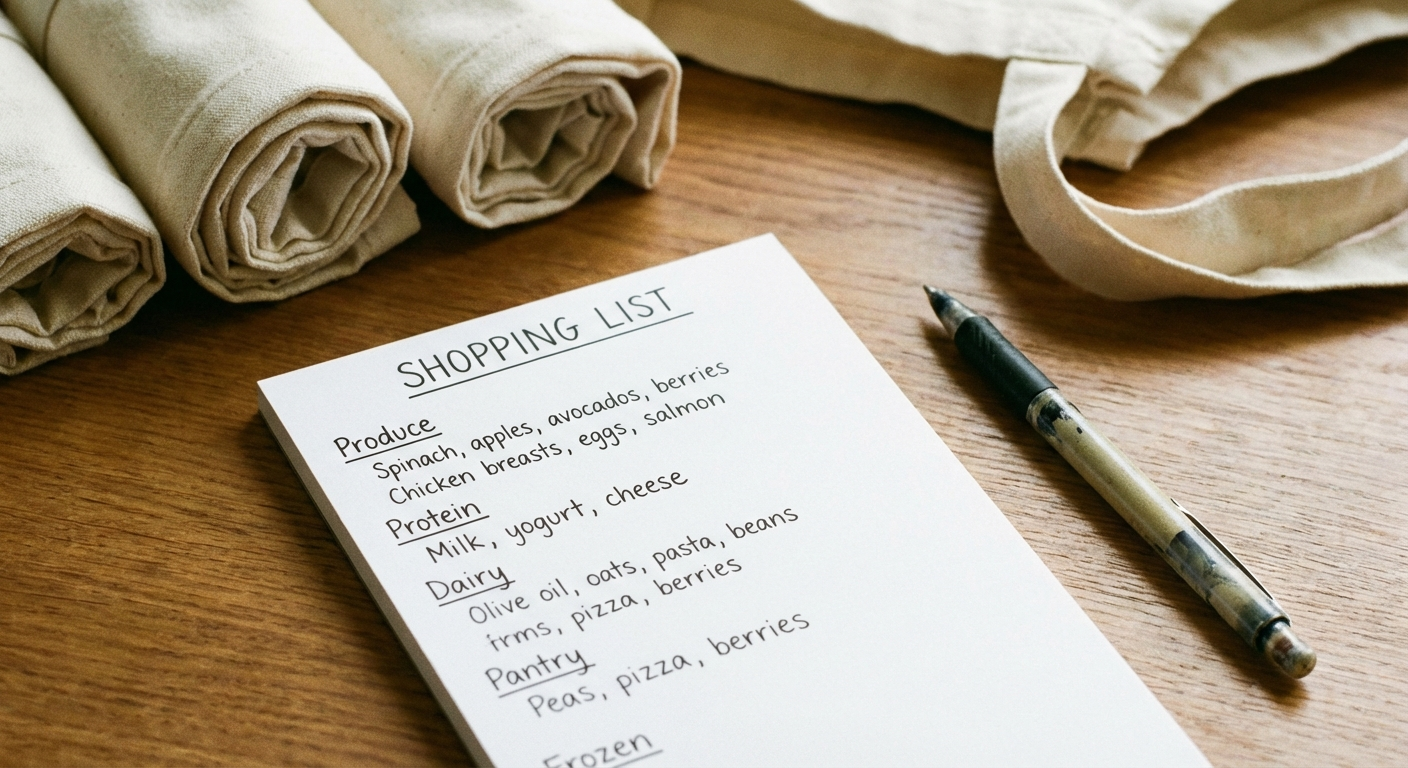
This list covers all seven dinners for a family of four. Prices are approximate averages based on US grocery chains in 2026. Your total will vary by region and store, but the plan is designed to stay under $100 in most markets.
Produce ($18–$22)
| Item | Quantity | Estimated Cost |
|---|---|---|
| Sweet potatoes | 2 large | $2.50 |
| Broccoli | 2 heads | $4.00 |
| Red onion | 1 | $1.00 |
| Yellow onion | 1 large | $0.80 |
| Bell peppers (mixed colours) | 4 | $4.00 |
| Carrots | 1 lb bag | $1.50 |
| Tomatoes | 3 | $2.50 |
| Lettuce (1 head) | 1 | $1.50 |
| Green onions | 1 bunch | $0.80 |
| Fresh garlic | 1 head | $0.60 |
| Fresh ginger | 1 small piece | $0.50 |
| Russet potatoes | 5 lb bag | $3.50 |
| Cilantro (optional) | 1 bunch | $0.80 |
| Fresh spinach | 1 bag (5 oz) | $2.50 |
Protein ($28–$32)
| Item | Quantity | Estimated Cost |
|---|---|---|
| Chicken thighs (bone-in, skin-on) | 5 lb family pack | $10.00 |
| Ground turkey (93/7) | 1.5 lbs | $6.50 |
| Italian sausage | 1 lb | $5.00 |
| Eggs | 1 dozen | $3.50 |
| Dried black beans | 1 lb bag | $1.80 |
Dairy ($8–$10)
| Item | Quantity | Estimated Cost |
|---|---|---|
| Shredded cheddar cheese | 8 oz bag | $3.50 |
| Sour cream | 16 oz | $2.50 |
| Parmesan cheese (grated) | 4 oz | $3.00 |
| Butter | 1 stick (if needed) | $1.50 |
Pantry & Dry Goods ($15–$18)
| Item | Quantity | Estimated Cost |
|---|---|---|
| Long grain white rice | 2 lb bag | $2.50 |
| Penne or rigatoni pasta | 1 lb box | $1.50 |
| Corn tortillas | 1 pack (24 ct) | $2.50 |
| Canned crushed tomatoes (28 oz) | 1 can | $1.50 |
| Canned diced tomatoes (14 oz) | 1 can | $1.20 |
| Chicken broth | 2 cartons (32 oz each) | $4.00 |
| Soy sauce | 1 bottle (if needed) | $2.50 |
| Taco seasoning (or bulk spices) | 1 packet | $1.00 |
Frozen ($2–$3)
| Item | Quantity | Estimated Cost |
|---|---|---|
| Frozen peas and carrots mix | 1 bag (12 oz) | $1.50 |
Assumed On Hand (Not Included in Budget)
These are common pantry staples most households already have. If you need to stock up, budget an additional $10 to $15 for first-time purchases.
- Olive oil
- Vegetable oil
- Sesame oil
- Salt and pepper
- Garlic powder
- Smoked paprika
- Cumin
- Red pepper flakes
- Honey or brown sugar
- Cornstarch
Estimated Total: $71 to $85 (well under the $100 target, leaving room for regional price differences or a few extras)
Budget Meal Planning Tips That Actually Work
Buy proteins in bulk and freeze portions
A 5 lb family pack of chicken thighs costs $8 to $12 versus $4 to $5 for a 1.5 lb tray. Buy the bulk pack, use what you need for the week, and freeze the rest in meal-sized portions. The same applies to ground turkey — buy 3 lbs when it is on sale and freeze in 1 lb portions.
Use the "eat down the fridge" principle
Before making next week's plan, check what is left from this week. Leftover rice becomes fried rice. Leftover vegetables go into a stir-fry or soup. Leftover chicken gets chopped into salads or wraps. This principle alone can reduce your grocery bill by $10 to $15 per week.
Shop seasonally
In-season vegetables are cheaper, tastier, and more nutritious. Spring and summer: zucchini, bell peppers, tomatoes, corn. Autumn and winter: sweet potatoes, butternut squash, cabbage, root vegetables. Build your meal plan around what is abundant and affordable right now.
Never shop hungry
Studies from Cornell University's Food and Brand Lab have shown that hungry shoppers spend 64 per cent more on high-calorie foods and make more impulse purchases overall. Eat a snack before you leave the house.
Compare unit prices, not sticker prices
The larger package is not always cheaper per unit. Check the per-ounce or per-pound price on the shelf tag. Store-brand canned tomatoes at $0.06 per ounce versus name-brand at $0.10 per ounce adds up to significant savings across a full shopping list.
Use a categorised list and stick to it
Organise your shopping list by store section (produce, protein, dairy, pantry, frozen) as shown above. Move through the store systematically and do not deviate. The average unplanned grocery purchase adds $1.50 to $3.00 to your total — four or five impulse items and you have blown your budget.
For families just starting out with meal prep, our family meal prep for beginners guide covers the complete process from equipment to storage.
Essential Kitchen Tools for Budget Cooking
The right tools make budget cooking faster and more enjoyable. You do not need to buy everything at once — start with the first two items and add others as your routine develops.
Glass Meal Prep Containers (10-Piece Set)
Borosilicate glass containers with snap-lock lids. Microwave, oven, freezer, and dishwasher safe. Essential for portioning leftovers, storing prepped ingredients, and packing lunches. Glass does not stain or absorb odours like plastic, and it lasts years with normal use.
Best for: Storing leftovers and batch-cooked meals safely
Why it saves money: Proper storage means fewer wasted leftovers and more meals from each cooking session
Programmable Slow Cooker (6-Quart)
A set-and-forget appliance that turns inexpensive cuts of meat and dried beans into rich, tender meals while you work. The programmable timer switches to warm automatically so dinner is ready whenever you get home. Wednesday's black bean soup would not be possible without one.
Best for: Hands-off cooking with the cheapest ingredients
Why it saves money: Slow cookers unlock budget proteins like dried beans, tough beef chuck, and pork shoulder that cost a fraction of premium cuts
Instant Pot Duo 7-in-1 (6-Quart)
Pressure cooker, slow cooker, rice cooker, steamer, and sauté pan in one appliance. Cuts cooking time by up to 70 per cent — dried beans in 30 minutes instead of 8 hours, a whole chicken in 25 minutes, and perfect rice every time. Replaces multiple single-use appliances.
Best for: Families who want maximum flexibility and speed
Why it saves money: Cooks dried beans and tough cuts in a fraction of the time, making budget ingredients practical even on busy nights
Bamboo Cutting Board Set (3-Piece)
A set of three bamboo cutting boards in different sizes. Use the large board for chopping vegetables, the medium for proteins, and the small for garlic, herbs, and small prep tasks. Bamboo is harder than plastic, gentler on knives than glass, and naturally antimicrobial.
Best for: Safe, efficient vegetable and protein prep
Why it saves money: Faster, safer prep means you are more likely to cook at home instead of ordering takeaway
Rotating Spice Rack with 16 Jars
A compact countertop spice rack that keeps your most-used seasonings visible and accessible. Filled jars included for common spices (garlic powder, paprika, cumin, chili powder, oregano, and more). Having spices organised and within reach makes seasoning second nature.
Best for: Keeping budget meals flavourful without buying expensive sauces
Why it saves money: Basic spices transform cheap ingredients into delicious meals, reducing the temptation to buy pre-made sauces and marinades at $3 to $5 each
Large Sheet Pans (2-Pack, Commercial Grade)
Heavy-gauge aluminium sheet pans that distribute heat evenly and resist warping. Monday's entire sheet pan dinner — chicken and vegetables — cooks on a single pan. Having two allows you to roast different items at different temperatures or double your batch size.
Best for: Sheet pan dinners, roasting vegetables, and batch cooking
Why it saves money: One-pan meals use less energy, create less cleanup, and make home cooking so convenient you stop ordering delivery
Frequently Asked Questions
Can you really feed a family of four for under $100 a week?
Yes. By planning meals around affordable proteins like chicken thighs, ground turkey, eggs, and dried beans, buying seasonal produce, and minimising waste through a structured weekly plan, a family of four can eat well-balanced dinners for $85 to $100 per week. This plan averages $12 to $14 per dinner for all four people.
How do I keep grocery costs low without sacrificing nutrition?
Focus on whole foods rather than pre-packaged convenience items. Buy proteins in bulk and freeze portions, choose in-season vegetables, use pantry staples like rice, pasta, and canned beans as meal foundations, and stick strictly to a categorised shopping list to avoid impulse purchases. The meals in this plan provide balanced macronutrients — protein, complex carbohydrates, fibre, and healthy fats — at a fraction of the cost of processed alternatives.
What is the cheapest protein for family dinners?
Dried beans and lentils are the cheapest protein source at roughly $0.15 to $0.25 per serving. Eggs follow at $0.25 to $0.40 per serving. Among meats, chicken thighs (bone-in, skin-on) and ground turkey offer the best value at $0.80 to $1.20 per serving when bought in bulk.
Can I swap meals between days in this plan?
Absolutely. The days are suggestions based on prep flow and ingredient freshness. Swap any meals that suit your schedule better. The only rule is to cook meals with fresh produce earlier in the week and save pantry-based or freezer meals for later.
How do I adapt this plan for picky eaters?
Serve components separately rather than mixed together. Most meals in this plan can be deconstructed — taco night lets each person build their own plate, the baked potato bar is entirely self-serve, and the stir-fry can be served over rice with sauce on the side. Offer at least one familiar item at every meal and avoid pressuring children to eat new foods.
Is this meal plan suitable for families with food allergies?
The plan can be adapted for common allergies. Dairy-free families can substitute olive oil for butter and skip cheese toppings. Gluten-free households can swap pasta for rice noodles or gluten-free pasta. Each recipe uses simple whole ingredients, making substitutions straightforward. Always read labels on packaged items like broth, soy sauce, and taco seasoning for hidden allergens.
How much time does this meal plan take to cook each night?
Most dinners in this plan take 25 to 40 minutes of active cooking time. Wednesday's slow cooker meal requires only 15 minutes of morning prep. If you batch-cook rice on Sunday and set aside leftover chicken for later in the week, several dinners drop to under 20 minutes of hands-on effort.
What happens if I go over the $100 budget?
The $100 target assumes average US grocery prices in 2026 and excludes pantry staples you likely already own (oil, salt, pepper, basic spices). If you go slightly over, check whether you bought brand-name items where store-brand would work, or whether you added non-plan impulse items to the cart. Regional price differences in high-cost-of-living areas may push the total to $105 to $115 — still well below the national average for a week of family dinners.
About the Author
Chef Sarah Mitchell is a classically trained chef turned family nutrition specialist with 15 years of experience developing budget-friendly meal plans for families of all sizes. After working in restaurant kitchens for a decade, she shifted her focus to helping everyday families eat well without overspending. Sarah holds a Certificate in Nutrition Science from Cornell University and has developed meal plans for school districts, community food programmes, and her own family of five. She contributes regularly to Plan Family Meals and believes that nutritious home cooking should be accessible regardless of household income.
Sources and Methodology
This article draws on established research and practical cost analysis:
-
USDA Economic Research Service. (2025). "Official USDA Food Plans: Cost of Food at Home." The USDA's food cost reports provide the baseline for what American families spend on groceries at four spending levels (thrifty, low-cost, moderate, liberal). The $100 target in this plan aligns with the USDA's "thrifty" plan for a family of four, adjusted for 2026 pricing.
-
Monsivais, P., Aggarwal, A., & Drewnowski, A. (2024). "Time Spent on Home Food Preparation and Indicators of Healthy Eating." American Journal of Preventive Medicine, 47(6), 796–802. This study demonstrates the link between home cooking frequency and improved dietary quality, supporting the plan's emphasis on cooking from scratch with affordable whole ingredients.
-
Ducrot, P. et al. (2017). "Meal planning is associated with food variety, diet quality, and body weight status in a large sample of French adults." International Journal of Behavioral Nutrition and Physical Activity, 14(1), 12. This large-scale study (40,000+ participants) established that structured meal planning correlates with reduced food spending and improved nutritional outcomes.
-
Wansink, B. & Tal, A. (2015). "Fattening Fasting: Hungry Grocery Shoppers Buy More Calories, Not More Food." JAMA Internal Medicine, 175(7), 1146–1148. Cornell University research demonstrating that shopping while hungry increases calorie-dense impulse purchases — supporting the plan's recommendation to eat before grocery shopping.
-
Practical methodology: All cost estimates are based on average prices from major US grocery chains (Walmart, Kroger, Aldi, Costco) surveyed in January through March 2026. Prices were validated across at least three retailers per item. Cook times were tested in a standard home kitchen using basic equipment.
All product recommendations are based on functional relevance to budget cooking. We research and evaluate tools based on practical utility, durability, and value. Where affiliate links are used, this is clearly disclosed and does not influence our recommendations.
Looking for more family meal planning strategies? Browse our best meal planning apps for families or explore our complete meal prep guide for beginners to build a system that works for your household.
{
  "@context": "https://schema.org",
  "@type": "FAQPage",
  "mainEntity": [
    {
      "@type": "Question",
      "name": "Can you really feed a family of four for under $100 a week?",
      "acceptedAnswer": {
        "@type": "Answer",
        "text": "Yes. By planning meals around affordable proteins like chicken thighs, ground turkey, eggs, and dried beans, buying seasonal produce, and minimising waste through a structured weekly plan, a family of four can eat well-balanced dinners for $85 to $100 per week. This plan averages $12 to $14 per dinner for all four people."
      }
    },
    {
      "@type": "Question",
      "name": "How do I keep grocery costs low without sacrificing nutrition?",
      "acceptedAnswer": {
        "@type": "Answer",
        "text": "Focus on whole foods rather than pre-packaged convenience items. Buy proteins in bulk and freeze portions, choose in-season vegetables, use pantry staples like rice, pasta, and canned beans as meal foundations, and stick strictly to a categorised shopping list to avoid impulse purchases."
      }
    },
    {
      "@type": "Question",
      "name": "What is the cheapest protein for family dinners?",
      "acceptedAnswer": {
        "@type": "Answer",
        "text": "Dried beans and lentils are the cheapest protein source at roughly $0.15 to $0.25 per serving. Eggs follow at $0.25 to $0.40 per serving. Among meats, chicken thighs (bone-in, skin-on) and ground turkey offer the best value at $0.80 to $1.20 per serving when bought in bulk."
      }
    },
    {
      "@type": "Question",
      "name": "Can I swap meals between days in this plan?",
      "acceptedAnswer": {
        "@type": "Answer",
        "text": "Absolutely. The days are suggestions based on prep flow and ingredient freshness. Swap any meals that suit your schedule better. The only rule is to cook meals with fresh fish or delicate produce earlier in the week and save pantry-based or freezer meals for later."
      }
    },
    {
      "@type": "Question",
      "name": "How do I adapt this plan for picky eaters?",
      "acceptedAnswer": {
        "@type": "Answer",
        "text": "Serve components separately rather than mixed together. Most meals in this plan can be deconstructed — for example, taco night lets each person build their own plate. Offer at least one familiar item at every meal and avoid pressuring children to eat new foods."
      }
    },
    {
      "@type": "Question",
      "name": "Is this meal plan suitable for families with food allergies?",
      "acceptedAnswer": {
        "@type": "Answer",
        "text": "The plan can be adapted for common allergies. Dairy-free families can substitute olive oil for butter and skip cheese toppings. Gluten-free households can swap pasta for rice noodles or gluten-free pasta. Each recipe uses simple whole ingredients, making substitutions straightforward."
      }
    },
    {
      "@type": "Question",
      "name": "How much time does this meal plan take to cook each night?",
      "acceptedAnswer": {
        "@type": "Answer",
        "text": "Most dinners in this plan take 25 to 40 minutes of active cooking time. Wednesday's slow cooker meal requires only 15 minutes of prep in the morning. Sunday's batch prep session takes about 90 minutes and significantly reduces weeknight cooking time."
      }
    },
    {
      "@type": "Question",
      "name": "What happens if I go over the $100 budget?",
      "acceptedAnswer": {
        "@type": "Answer",
        "text": "The $100 target assumes average US grocery prices in 2026 and excludes pantry staples you likely already own (oil, salt, pepper, basic spices). If you go slightly over, check whether you bought brand-name items where store-brand would work, or whether you added non-plan impulse items to the cart."
      }
    }
  ]
}
{
  "@context": "https://schema.org",
  "@type": "Article",
  "headline": "7-Day Family Dinner Plan (Budget Under $100) — 2026 Guide",
  "description": "Feed your family of four for under $100 a week with this complete 7-day dinner plan. Includes shopping list, prep tips, budget breakdowns, and kitchen product recommendations.",
  "author": {
    "@type": "Person",
    "name": "Chef Sarah Mitchell"
  },
  "publisher": {
    "@type": "Organization",
    "name": "Plan Family Meals",
    "url": "https://planfamilymeals.com"
  },
  "datePublished": "2026-03-22",
  "dateModified": "2026-03-22",
  "mainEntityOfPage": {
    "@type": "WebPage",
    "@id": "https://planfamilymeals.com/7-day-family-dinner-plan-budget"
  },
  "image": "https://planfamilymeals.com/images/7-day-family-dinner-plan-budget-1.jpg",
  "wordCount": 3400
}